

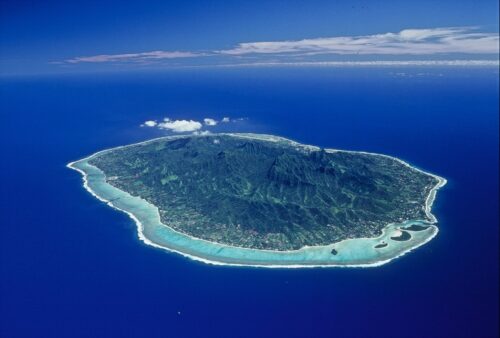
In the heart of the South Pacific, where turquoise waters kiss soft coral beaches, the Cook Islands are more than just a scenic paradise. They are a living canvas of culture, a place where music and dance are not merely art forms but the very pulse of the community, echoing the stories, values, and identity of its people. From the rustle of tapa cloth to the rhythmic beat of wooden drums, every movement and note carries a centuries-old legacy, interweaving history, spirituality, and communal life in a way that is uniquely Cook Islands.
The Spiritual Roots of Music and Dance
To understand the Cook Islands’ traditional music and dance, one must first understand their connection to spirituality. These islands, settled by Polynesians over a thousand years ago, inherited a belief system where the physical and spiritual worlds were intertwined. Music and dance were not performed simply for entertainment; they were acts of reverence. Marae, the sacred communal spaces, were often the stages where dances honored gods, ancestors, and the natural world. Songs would be sung to mark seasonal changes, thank the ocean for bountiful fish, or seek protection and guidance for the community.
Drums, gongs, and other percussive instruments were considered sacred, carrying messages between the living and the spiritual realm. Every beat, every hand clap, and every sway of the body was deliberate, coded with meaning that went far beyond the surface. This deep spiritual connection is what gives the traditional music and dance of the Cook Islands its undeniable emotional resonance, drawing listeners and participants into a shared experience of awe and reverence.
The Diversity of Dance Forms
The Cook Islands are not a single entity in cultural expression but a constellation of islands, each with subtle variations in dance and song. Among the most iconic is the ura, a dance performed by women that tells stories through graceful body movements. The ura is more than an aesthetic display; each motion of the hips, hands, and feet conveys narrative layers—from mythological tales of gods and creation to everyday experiences like fishing or gathering coconuts. Male dancers often perform alongside, executing vigorous drum-driven routines that symbolize strength, agility, and heroism.
Another fascinating aspect is the interplay of gender in traditional dance. Men and women have distinct roles, but their movements are complementary, reflecting the harmonious balance central to Polynesian worldviews. Women’s dances tend to emphasize elegance, fluidity, and storytelling, while men’s dances showcase physical prowess, stamina, and intricate footwork. When performed together, the visual and auditory harmony mirrors the community’s social cohesion, where every individual, regardless of role, contributes to a greater narrative.
Instruments That Sing the Land
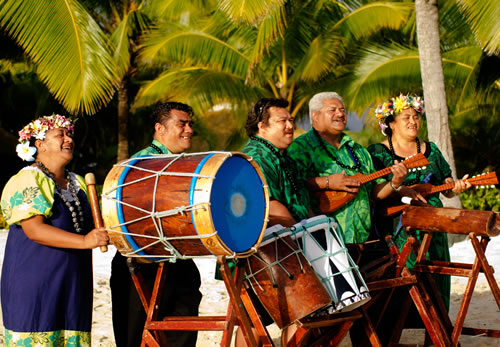
Music in the Cook Islands is inseparable from the instruments that produce it. Drums, particularly the pa’u drum, are central to traditional performances. Made from hollowed logs and sharkskin or other animal hides, these drums carry a deep, resonant sound that sets the rhythm for dancers. The beat of the drum is almost a language in itself, signaling tempo changes, emotional shifts, and the structure of the dance narrative.
Percussion is complemented by vocal harmonies. Traditional songs, often referred to as imene, are layered chants sung in the Cook Islands Māori language. These songs are polyphonic, sometimes with overlapping melodies, creating a rich, textured soundscape that can be both hauntingly beautiful and exhilaratingly lively. Lyrics frequently recount legends, moral lessons, and historical events, embedding knowledge and cultural memory into each performance. Music in the Cook Islands is thus both an art form and a vessel for continuity, ensuring that the stories of ancestors are carried forward through generations.
The Cultural Significance of Costume
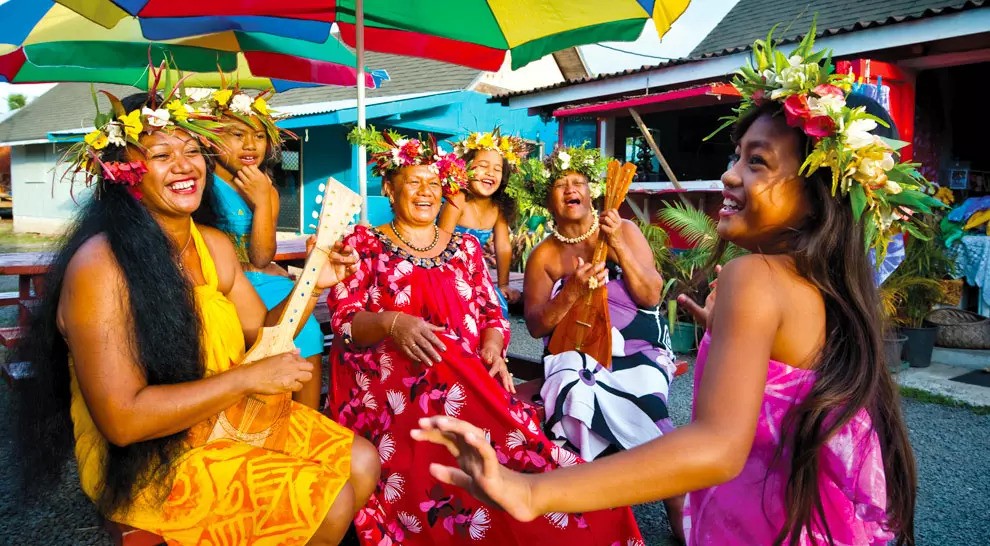
No discussion of dance in the Cook Islands is complete without acknowledging the importance of costume. Traditional attire is not mere decoration; it is a symbol of identity and a narrative device. Women often wear pareu skirts, adorned with floral or geometric patterns that echo local flora and symbols, paired with carefully crafted headpieces and necklaces made from shells, feathers, or flowers. Every accessory is chosen to reflect the story being told through dance. Men, while dressed more simply, often wear loincloths and armbands that accentuate movements and emphasize the strength and rhythm of their performance.
Costumes, combined with the rhythmic movements and the expressive gestures of dancers, create a multi-sensory story that communicates not only the content of the narrative but also its emotional depth. Watching a traditional Cook Islands dance is to witness a living tapestry of cultural memory, where every element is deliberately chosen to honor tradition while inviting the audience into the shared experience.
The Role of Community
In the Cook Islands, music and dance are inherently communal. Performances are rarely solitary events; they are occasions that involve family, neighbors, and extended community members. Festivals, ceremonies, and church gatherings often feature group performances, and participation is considered both a duty and a privilege. Even children are introduced to dance and song at a young age, ensuring that the next generation internalizes cultural values and expressive traditions.
Community involvement is more than social—it reinforces identity and continuity. By singing, drumming, or dancing together, participants collectively affirm their heritage, their connection to ancestors, and their place within the living cultural ecosystem. It’s a dynamic form of storytelling that allows culture to evolve while remaining deeply rooted in shared memory and practice.
Modern Adaptations and Preservation
While the Cook Islands’ traditional music and dance are ancient, they are not frozen in time. Contemporary performers have found ways to honor traditional forms while experimenting with modern instruments, fusion rhythms, and choreography. This evolution ensures that the cultural heartbeat remains vibrant, accessible to younger audiences, and adaptable to changing social contexts.
However, the preservation of authenticity remains paramount. Cultural custodians, elders, and dance schools carefully teach traditional forms, emphasizing the spiritual, historical, and social significance of each movement and melody. This conscious effort to maintain integrity amidst innovation demonstrates the community’s deep respect for heritage and its understanding that culture is both living and sacred.
Music and Dance as Identity
In the Cook Islands, to engage in music and dance is to engage in identity itself. It is a declaration of belonging, a celebration of ancestry, and an expression of the values that sustain island life. The arts serve as a bridge between generations, connecting elders to youth, and ensuring that even as the world changes, the essence of Cook Islands culture remains recognizable and resonant.
Tourists and outsiders are often captivated by these performances, but it’s important to recognize that for islanders, music and dance are not entertainment alone—they are lifeblood, ritual, and communication. Through song and movement, the community expresses joy, sorrow, triumph, and gratitude, making each performance a mirror of the human experience as lived on these remote yet profoundly expressive islands.
Conclusion
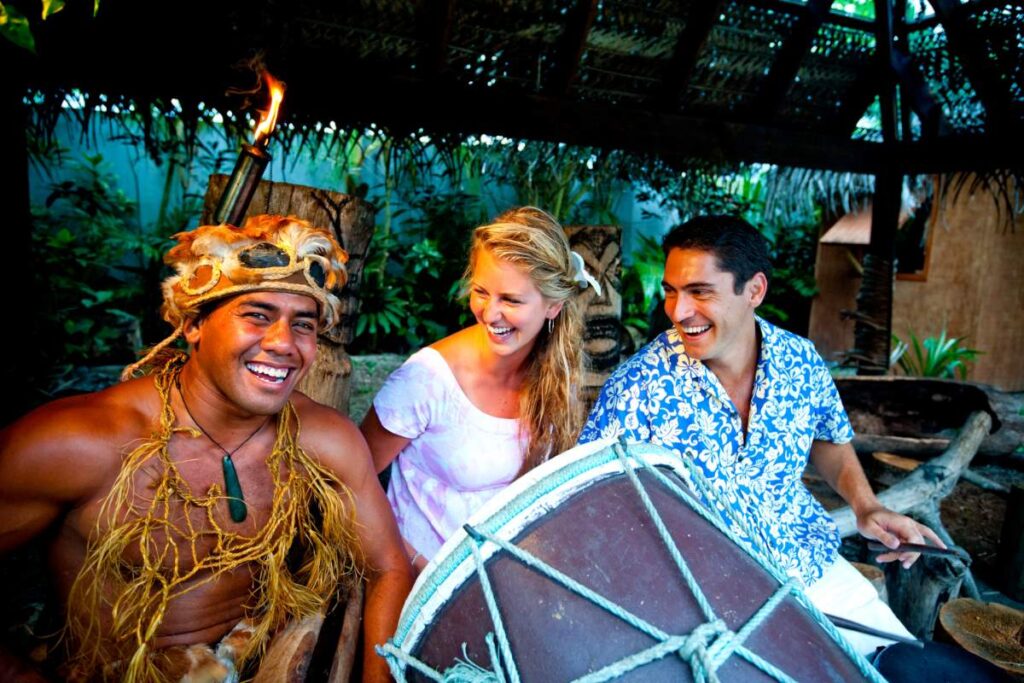
The traditional music and dance of the Cook Islands are far more than cultural artifacts; they are living expressions of the islands’ spirit. From the sacred rhythms of drums to the poetic sway of dancers’ hips, every performance is a testament to a people who have maintained their heritage through centuries of change and contact with the wider world. Music and dance are the heartbeat of the Cook Islands, resonating with stories, spirituality, and communal identity. They are a reminder that culture is never static—it lives in the movement of the body, the sound of the voice, and the shared experience of a community honoring its past while celebrating its present.
To witness Cook Islands music and dance is to feel the pulse of the Pacific itself, a rhythm that is at once ancient and alive, intimate and universal, grounding and transcendent. In every beat and every gesture, the islands’ people continue to tell their story, ensuring that the heartbeat of the Pacific will never fade.
