

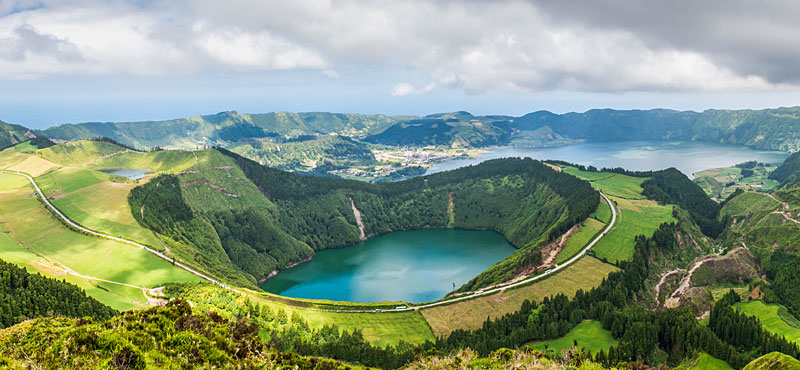
Hidden in the heart of the Atlantic Ocean, the Azores archipelago rises from the depths like a string of emerald jewels. Composed of nine volcanic islands, this remote region of Portugal seems almost suspended between continents — geographically distant yet culturally rich, shaped by centuries of isolation, migration, and resilience. What makes the Azores so fascinating is not merely their breathtaking beauty but the profound sense of shared identity that binds the islands together. Despite their physical separation and distinct local customs, the Azoreans share a soul — a cultural heartbeat that beats to the rhythm of the sea, faith, family, and tradition.

The Origins of an Island People
The story of the Azores begins in the fifteenth century, when Portuguese navigators first discovered these uninhabited islands. Settlers soon followed, drawn by fertile volcanic soil and the promise of a new life. They came not only from mainland Portugal but also from Flanders, Madeira, and even North Africa. Over time, this mix of settlers created a unique cultural mosaic. Each island developed its own dialects, recipes, and customs, yet all shared a deep reliance on the land and the ocean that surrounded them.
Isolation shaped Azorean culture in profound ways. For centuries, the people of the Azores had to rely on their own ingenuity to survive harsh winters, unpredictable seas, and volcanic eruptions. Communities were tight-knit, faith was unshakable, and hospitality became second nature. These early hardships forged the collective resilience that still defines the Azorean spirit today — a quiet strength wrapped in kindness and humility.
Nine Islands, Nine Characters
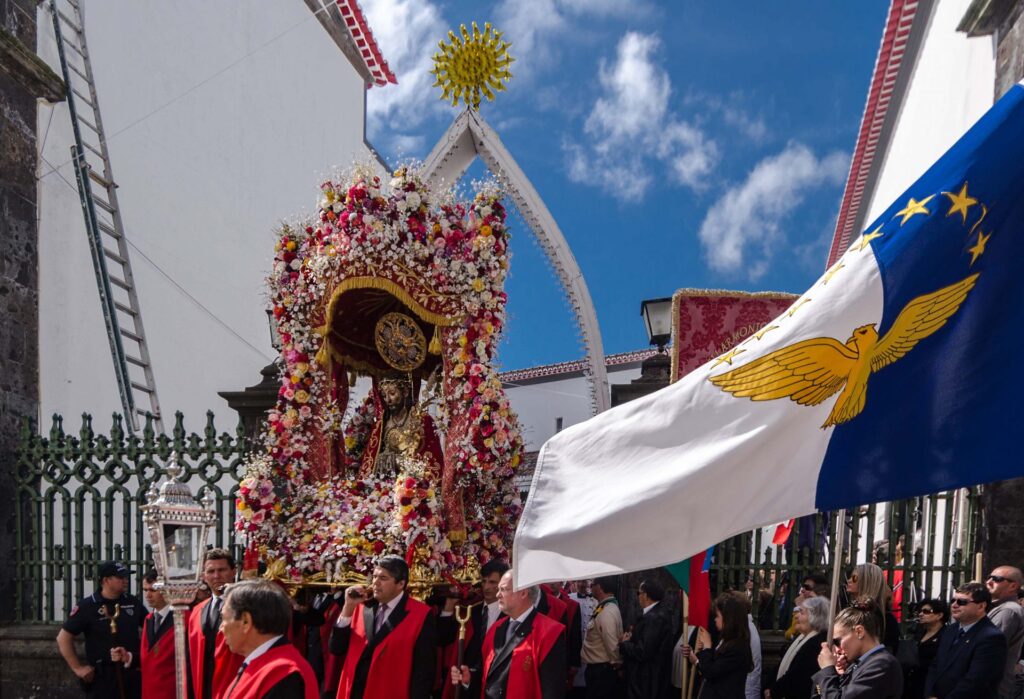
Though united by a common heritage, each island tells its own cultural story. São Miguel, the largest, is often called “The Green Island,” not just for its lush landscapes but for its dynamic cultural life. It’s home to the city of Ponta Delgada, where traditional festivals like the Festas do Senhor Santo Cristo dos Milagres fill the streets with devotion and color. The music, food, and flower carpets create a celebration that feels both intimate and grand — a perfect reflection of Azorean duality.
Terceira, known for its vibrant spirit, is famous for its touradas à corda, a traditional form of bull running unique to the island. Here, festivals blend courage, community, and laughter, creating moments of joy that unite generations. The capital, Angra do Heroísmo, a UNESCO World Heritage Site, stands as a living museum of Azorean history, with its pastel-colored houses and cobblestone streets whispering tales of maritime glory.
On Pico Island, the culture is defined by stone and vine. The black volcanic landscape contrasts dramatically with the green vines that grow in tiny stone-walled plots — a testament to human persistence. The islanders’ connection to their land and wine is deep, almost sacred. Their verdelho wine, once prized by European nobility, remains a symbol of endurance and artistry.
Faial, “The Blue Island,” owes its identity to the sea. For centuries, it was a crossroads for sailors, whalers, and explorers. Its marina, a hub for yachts crossing the Atlantic, bears walls covered with paintings left by visiting crews — a global gallery of maritime culture. Faial’s people have inherited that same outward-looking spirit, open to the world yet deeply proud of their island roots.
São Jorge stands apart for its dramatic cliffs and culinary treasures. Its famous queijo São Jorge, a tangy, aged cheese, has become a cultural emblem of the island’s pastoral traditions. Shepherding remains central to daily life, with cheese-making passed down through generations as both art and livelihood.
Graciosa, “The Graceful Island,” lives up to its name with a slower rhythm and gentle charm. Known for its windmills and whitewashed villages, it captures the essence of Azorean simplicity — where life unfolds in harmony with the land and sea.
Flores and Corvo, the westernmost islands, are where the Azorean soul feels closest to nature. Life here moves at the pace of waves and wind. Flores, draped in waterfalls and wildflowers, has nurtured a people deeply connected to the environment, while Corvo, with fewer than 500 inhabitants, preserves one of the most intimate communities in Europe — a living reminder that cultural identity can thrive even in the smallest places.
Finally, Santa Maria, the oldest of the islands, carries echoes of the past. Its warm, dry climate gives rise to unique agricultural traditions and a distinct musical culture. Folk songs here are infused with nostalgia and pride, often sung at gatherings where past and present meet through melody and memory.

Language, Music, and the Poetry of Everyday Life
The Azorean dialects vary subtly from island to island, creating a linguistic map of identity. The differences are more than just pronunciation; they are reflections of history. Influences from early settlers, sailors, and even American whalers who stopped by in the nineteenth century have left traces in local speech. Yet, despite these variations, there’s an unmistakable musicality to the Azorean voice — a rhythm that mirrors the undulating Atlantic.
Music, too, is the lifeblood of Azorean culture. The viola da terra, a ten-string guitar found primarily in São Miguel and Terceira, produces a sound as raw and haunting as the islands themselves. Traditional songs, often about love, migration, and the sea, carry emotional weight. They tell stories of longing — for those who left to find work abroad and for the home they never forgot. Even today, many Azoreans maintain strong ties with communities in North America, especially in Massachusetts and California. Through music and festivals, the diaspora keeps that emotional bridge alive, reinforcing the shared soul of the islands.
Dancing is equally central to Azorean life. Folk groups dressed in traditional costumes perform at festivals, their movements echoing centuries-old rituals.
Faith and the Festivals of the Spirit
Religion has always been a cornerstone of Azorean culture. The islands’ isolation deepened the people’s dependence on faith, especially in times of natural disaster. Nearly every village has its own chapel, and throughout the year, the calendar overflows with religious festivals.
The Festas do Divino Espírito Santo — the Festivals of the Holy Spirit — are perhaps the most emblematic. They blend faith, generosity, and community into a uniquely Azorean expression of belief. Originating in the Middle Ages, these festivals celebrate equality and charity. Each community selects “imperadores” (emperors) who organize feasts for everyone, symbolizing divine abundance and social unity.
These gatherings are as much cultural as they are spiritual. Tables laden with soup, bread, and wine bring together families and neighbors, blurring social boundaries. Processions fill the streets with music, banners, and prayers, transforming entire villages into stages of devotion. The red flags, white doves, and crowns of the Holy Spirit remain among the most recognizable symbols of Azorean identity.
Other festivals — such as the Sanjoaninas of Terceira or the Nossa Senhora dos Milagres in Pico — also highlight the deep intertwining of faith and festivity.
The Azorean Table: A Taste of Tradition
To understand Azorean culture fully, one must taste it. The cuisine reflects centuries of adaptation to the islands’ environment — simple ingredients elevated by patience and passion. In São Miguel, the cozido das Furnas is perhaps the most iconic dish. Cooked underground using geothermal heat, this stew of meats and vegetables captures the essence of Azorean ingenuity — turning volcanic energy into nourishment.
Seafood, of course, is ever-present. Fresh tuna, limpets, and octopus are staples, often grilled with olive oil and garlic. On Pico, wine remains a cultural treasure. Grown in lava fields protected by stone walls, the vines tell a story of survival against the odds. Each sip carries centuries of labor and love.
Migration and the Diaspora: The Azorean Heart Abroad
No story of Azorean culture is complete without mentioning migration. Over the centuries, waves of Azoreans left their islands in search of opportunity, especially to the United States and Canada. This migration, often driven by economic hardship or volcanic eruptions, created vibrant diasporic communities abroad.
Yet, leaving the islands never meant leaving behind their soul. Azorean clubs, folklore groups, and festivals continue to thrive overseas, serving as cultural anchors for second and third generations. In cities like Fall River, Massachusetts, the spirit of the islands lives on through food, music, and faith. This global network of Azorean descendants keeps the archipelago connected to the wider world, ensuring that the culture evolves without fading.
The Soul That Binds
What ultimately unites the nine islands is not geography or economy but a shared sensibility — a way of seeing the world shaped by wind, water, and memory. The Azorean soul is humble yet proud, shaped by centuries of endurance and a deep love for community. Whether on Pico’s rugged coastlines or in the quiet streets of Graciosa, that soul reveals itself in everyday gestures: a neighbor’s greeting, a song sung at dusk, a table shared among friends.
The Azores remind us that diversity need not divide. Each island has its own rhythm, its own voice, yet together they form a symphony — a living culture that continues to evolve while remaining true to its roots. In this harmony of difference, the Azores embody something rare and beautiful: nine islands, one soul.
